Booknet・Read Books & Webnovel
- 4.8
- Rating
- 1.00M
- Installs
- Free
- Price

 Analysis by App-foxy
I came away from Booknet・Read Books & Webnovel feeling that it is more interesting than a simple reading app. It is a place where I can discover English-language fiction, follow romance and webnovel-style stories, and also try writing something of my own. That combination gives it a different personality from a conventional ebook reader: I am not only opening finished books, but entering an ongoing community built around serialized reading and new authors.
My overall view is positive, with one important qualification. This is a strong choice if you enjoy discovering less familiar writers, reading in short sessions, and watching stories develop over time. It is less convincing if your priority is a carefully curated library of established books, a distraction-free reading tool, or a completely predictable reading experience. The app is free to install, although individual in-app purchases range from $1 to $9.99, so the way you choose stories and manage paid content matters.
What using Booknet feels like in everyday reading
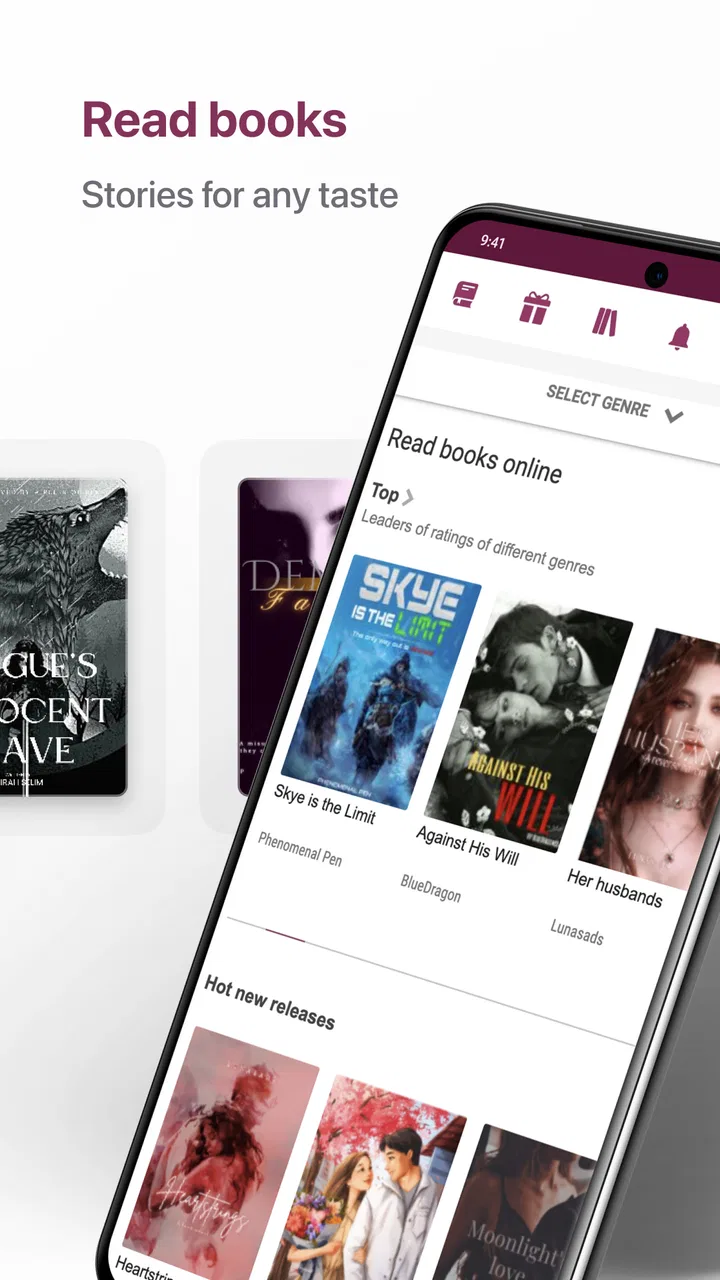
The first thing that stands out is the mixture of reading and writing. Booknet is published by My Novel, and its focus sits between a digital library and a social fiction platform. I can browse books and romance novels in English, then move from passive reading to creative work without changing to a separate service. That makes the app feel especially suitable for people who read because they want to understand how stories are built, not only because they want to finish them.
You May Also Like

 Blood Strike: 2.5 Anniversary
Blood Strike’s Loadouts Turn Every Drop Into a Tactical Gamble
A close look at Blood Strike’s custom loadouts: how fast access to signature weapons reshapes its battle royale rhythm, rewards preparation, and narrows the gap between fights.

 Pandora - Music & Podcasts
Pandora’s Music Is Easy to Start, but Harder to Recover
Pandora’s strength is its low-effort path from a seed to a station. Its weak spot is how much confidence it asks you to place in connection, setup, and quiet recovery.

 8 Ball Pool
 Is Built on Rivalries, Rematches, and Routine
A close look at the rivalries, rematches, shared routines, and unanswered safety questions that turn a quick pool match into a persistent mobile community.

 Samsung Music
’s Quiet Strength Is Playing What You Already Own
Its reach comes less from spectacle than from dependable access to a personal library. That simplicity is both the app’s strongest retention engine and its ceiling.

 AccuWeather: Weather Radar
AccuWeather Review: A Quick, Clear Forecast for Everyday Decisions
For everyday plans, the best forecast is the one you can understand quickly. AccuWeather makes rain timing, radar, and local conditions easy to act on, with a few trade-offs.

 Hill Climb Racing
Why Hill Climb Racing Still Turns Crashes Into One More Run
A tiny car, a bumpy hill and one more upgrade: Hill Climb Racing keeps resurfacing because its simple chaos makes every near-miss feel personal.
More From Our News Desk



In practice, I would use it differently from a traditional ebook app. With a standard reader, I usually choose a title, download or open it, and settle into a complete work. Here, I would expect more discovery and more variety in the way stories are presented. Some books may be easier to approach in small portions, which suits a commute, a lunch break, or a few minutes before bed. The trade-off is that serialized reading requires patience. A story may not provide the same sense of closure as a finished novel.
That rhythm is one of the app’s strongest arguments. I can read a few chapters during a short break without committing to a large book immediately. If I find a writer whose style works for me, I can continue with that author rather than relying only on familiar bestseller lists. For readers who feel that mainstream ebook stores keep showing the same popular titles, this broader discovery angle is genuinely appealing.
The app is aimed at teenagers and older readers, carrying a Teen content rating. I would still treat that label as a starting point rather than a guarantee that every story will suit every reader. A platform with many independent or community-driven works can contain very different tones, themes, and levels of polish. I recommend checking the description and early chapters before settling into a title, especially when choosing a story for a younger reader.
Why the writing side changes the experience
The writing option gives Booknet a useful second purpose. I can read a romance or webnovel and pay attention to the decisions behind it: how quickly the opening introduces conflict, how chapters end, and how dialogue keeps a reader moving forward. For someone learning to write, that is more practical than studying an isolated writing guide because the examples are connected to actual reading habits.
I would not treat it as a replacement for a full desktop writing environment. A phone is convenient for capturing an idea, drafting a scene, or continuing a chapter while away from a computer, but long-form editing on a small screen can become tiring. The app makes the most sense for writers who want to publish and develop stories in the same place where readers encounter them, rather than for authors who need extensive formatting and manuscript-management tools.
One useful workflow is to read with a notebook or separate notes app nearby. When I notice a strong opening, an effective cliffhanger, or a romance plot that handles tension well, I can record what worked before continuing. This turns casual reading into a private study session. The important point is to learn from structure and pacing rather than copying a particular author’s voice.
Another practical approach is to use the app as a testing ground for ideas. A new writer can begin with a short concept, observe whether the opening is easy to follow, and revise future chapters based on their own reading experience. I would keep expectations realistic: publishing a story does not automatically make it polished or widely read. The value is in the direct connection between creating and consuming fiction.
Where it is strongest for readers
The clearest strength is variety within a specific kind of reading. People who enjoy romance, webnovels, and English-language fiction have a focused environment rather than a general-purpose library filled with unrelated media. The app’s store summary emphasizes unlimited reading, and that promise matches the way I would approach it: browsing widely, sampling different stories, and returning to several titles instead of treating one book as the entire experience.
It is also a good fit for readers who like finding authors before they become familiar names. That discovery can feel more personal than selecting a heavily promoted bestseller. I enjoy the sense that I am exploring a living catalog rather than simply choosing from a fixed shelf. The downside is that discovery takes effort. I may need to sample several openings before finding a story with the right editing, pace, and tone.
The app’s popularity suggests that this model has found a substantial audience. It has an average rating of 4.8 from around 50 thousand ratings, and it has passed 1 million installs. Those figures do not tell me that every story will be excellent, but they do indicate that the reading-and-writing concept is resonating with many users. I see the rating as evidence of a satisfying overall experience, not as a substitute for judging individual books.
I also appreciate that the app is free to start. That lowers the barrier for experimentation: I can install it, browse the available fiction, and decide whether the format suits me before spending anything. Still, free access should not be confused with every possible reading path being free. Because in-app purchases are available, I would pay attention to how a chosen story is presented and whether continuing requires a purchase.
A realistic daily scenario
Imagine that I have a twenty-minute train ride and want something lighter than a printed novel. I open Booknet, browse English romance or webnovel fiction, read the beginning of a few titles, and choose one with an immediate conflict. I read part of it on the way to work, stop when I reach my destination, and return later. That is where the app feels natural: it supports fragmented reading without requiring me to carry a separate book.
In the evening, I might switch roles and work on a short scene of my own. Reading another author earlier in the day gives me a clearer sense of what I want to improve, perhaps a slower opening or a stronger ending to a chapter. This is a more useful routine than simply scrolling through recommendations because it connects entertainment with practice.
There is a small discipline involved. I would avoid opening the app when I only have a minute and expect to make a meaningful decision, because browsing can easily become the main activity. I would save a few promising titles, choose one reading goal, and leave the rest for another session. That approach makes the large selection feel manageable.
The limitations I would consider before installing
The biggest weakness is consistency. A platform that welcomes many stories can offer exciting discoveries, but it cannot give every title the same editing, pacing, or narrative control. I have to be willing to abandon books that do not hold my attention. Readers who expect the uniform presentation of a professionally edited ebook store may find this unevenness frustrating.
Serialized fiction can create another kind of friction. A chapter may end at a dramatic moment, and the next part may not provide the immediate continuation I want. That is enjoyable for readers who like anticipation, but irritating for anyone who prefers to finish a complete arc in one sitting. Before becoming invested, I would check how a story is organized and whether its release pattern suits my patience.
Payment can also affect the reading flow. The app is free, but purchases from $1 to $9.99 per item mean that some readers will need to make decisions about which stories or content are worth paying for. I would set a personal budget before browsing deeply. That simple step prevents the excitement of a cliffhanger from making the decision for me.
Another limitation is the language focus. The experience is built around English reading, so it is best for users comfortable reading fiction in English. If I wanted translated classics, academic reference material, comics, audiobooks, or a broad multilingual catalog, I would choose a more specialized alternative. Booknet has a clear identity, and that identity is helpful only when it matches what I want to read.
The phone-first nature may not suit every writer either. I can imagine drafting comfortably in short bursts, but a long novel still benefits from a larger screen and a more structured editing process. I would use the app for ideas, chapters, and reader-facing publication, while keeping a separate backup and a more powerful tool for major revisions. That is not a criticism of the concept; it is a realistic boundary for mobile writing.
How it compares with ordinary ebook apps
Compared with a conventional ebook reader, Booknet is more exploratory and participatory. An ebook app is usually strongest when I already know what I want: a particular author, a purchased title, or a finished book. Booknet is stronger when I want to browse emerging fiction, read romance in a webnovel format, or move between reading and writing.
The usual alternative is better for a polished, settled reading experience. If I am taking a long flight and want a complete novel with dependable formatting, I would likely prefer a traditional ebook store or library app. If I am at home looking for a new serialized romance and enjoy sampling unfamiliar authors, Booknet becomes more attractive.
It also differs from a dedicated writing app. A writing tool normally gives me a private workspace, detailed organization, and control over drafts. Booknet’s appeal is the connection to readers and published stories. I would select it when I want my writing activity to exist close to a reading community, not when I need a sophisticated private manuscript system.
That distinction helps explain the app’s audience. It is not trying to be every kind of book service at once. Its strongest use is the overlap between readers who enjoy ongoing online fiction and writers who want to share stories in that same environment. Outside that overlap, a more focused app may be more efficient.
Who should try it, and who should skip it
I recommend Booknet to readers who enjoy romance, English webnovels, and discovering authors through samples rather than only through major publishing lists. It is especially suitable for people who read in short sessions, like cliffhangers, and do not mind deciding which stories deserve their time. The free entry point makes it easy to test without committing immediately.
I also recommend it to aspiring writers who want to study serialized storytelling while developing their own work. The most useful benefit is not simply the ability to write on a phone; it is the chance to compare the reader’s experience with the writer’s decisions. That feedback loop can sharpen an understanding of openings, pacing, and chapter structure.
I would skip it if I want only reference books, established literary fiction, audiobooks, or a completely offline-style library experience. I would also hesitate if inconsistent editing bothers me or if I dislike stories that unfold over time. Readers who are easily tempted by paid continuation should decide their spending limits before starting several titles at once.
On Android, the app supports devices running Android 7.0 or later. Its current version is 4.1.19, which is useful to know when checking compatibility before installation. The app was released on February 21, 2020, and its continued presence alongside a large install base makes it feel like an established service rather than a brand-new experiment.
My final recommendation
Booknet・Read Books & Webnovel works best when I approach it as a discovery platform, not as a perfect replacement for every book app. Its combination of English fiction, romance, serialized reading, and personal writing gives it a clear character. I can find stories outside the usual bestseller circuit, read in flexible sessions, and learn about storytelling by moving between the reader’s and writer’s sides.
Its weaknesses are equally clear: quality can vary, serialized stories require patience, and optional purchases deserve attention. Those are meaningful trade-offs, not minor details. If I want a controlled catalog of finished books, I would choose a traditional ebook service. If I want an active, less predictable space for webnovels and creative experimentation, I would choose Booknet.
My advice is to start slowly. Sample several openings, keep only the stories that genuinely hold your attention, and decide in advance how you feel about paid content. Used that way, the app offers more than unlimited browsing: it becomes a practical place to discover fiction, develop a reading habit, and see whether writing for an online audience appeals to you.
FAQs for Booknet・Read Books & Webnovel
01What is Booknet・Read Books & Webnovel?
Booknet is a reading and writing platform focused on web novels, serialized fiction, and independent authors. After exploring the app, I found that it combines an online library with a community experience, allowing readers to follow stories as they are published and discover books in genres such as romance, fantasy, mystery, science fiction, and drama. Availability and catalog size can vary by language and region.
02Is Booknet free to use, or does it require payment?
Booknet can generally be downloaded and used without an upfront subscription, and many books or chapters may be available for free. However, some authors can place chapters, complete books, or special content behind paid access, depending on the title. Before reading further, check the book’s payment information and the available in-app purchase options, since prices and access conditions may differ.
03Can I read books offline in the Booknet app?
Offline reading depends on the title, app version, and the access rights provided for that particular book. Some content may be saved or made available for reading without an internet connection, while other chapters require an active connection for loading or verification. If offline access is important to you, confirm the download or reading options on the book page before relying on the app during travel.
04Can users write and publish their own stories on Booknet?
Yes, Booknet is designed not only for readers but also for writers who want to publish original stories online. Authors can typically upload chapters, build a following, receive reader feedback, and release novels progressively. Publishing tools, moderation rules, monetization features, and eligibility requirements may vary by country and account status, so new writers should review the platform’s current guidelines before posting.
05Is Booknet suitable for children and teenagers?
Booknet’s suitability depends on the individual book rather than the platform alone. The catalog may include romance, mature themes, violence, strong language, or other content intended for older readers. Parents and younger users should review book descriptions, ratings, tags, and age guidance before reading. It is also wise to check account, privacy, and purchase settings if the app is used by a child or teenager.
Pros
- Large library of novels from independent and emerging authors.
- New chapters are added regularly
- keeping ongoing stories engaging.
- Supports reading in multiple languages
- depending on the available title.
- Readers can interact with authors and other fans through comments.
- Personalized recommendations help users discover similar books.
Cons
- Many stories are unfinished and may take a long time to receive updates.
- Some books require coins or paid access to unlock later chapters.
- Content quality can vary considerably between different authors.
- The app may feel cluttered because of frequent promotional content.
- Offline reading availability may differ depending on the book and access level.

Booknet・Read Books & Webnovel
Gallery